
InnoEthics' Broader Thoughts
Real or Fake? AI content, meat in you burger, the internet of things

Three recent posts from Allegra Cuomo, founder of InnoEthics: A Philosophy Student's take on the Ethics of Al covering challenging questions on our new techno-centric world. Is she right or wrong?
In 2024, a fake Joe Biden robocall told voters in New Hampshire to skip elections and save their vote for the general election that later in the year. That same election cycle, a synthetic Taylor Swift appeared to endorse Donald Trump, with the image being shared by him on Truth Social.
Both pieces of content were AI-generated, and both spread faster than any correction. And both landed in a world that is struggling to find reliable ways to spot the difference between content that is human-generated versus content that is AI-generated.
Enter generative AI watermarking. AI watermarking is ‘a process of embedding into the output of an artificial intelligence model a recognisable and unique signal that serves to identify the content as AI-generated’. In theory, deepfakes become detectable and disinformation becomes accountable.
Read on Medium:
For Medium members: How to Tell What’s Real or Fake? The Importance of AI Watermarking | by Allegra Cuomo | InnoEthics: A Philosophy Student’s guide to Ethics of AI
For non-Medium members: https://medium.com/a-philosophy-students-guide-to-ethics-of-ai/how-to-tell-whats-real-or-fake-the-importance-of-ai-watermarking-97ec4edae8c6?sk=8775beab2c2d75add84d30484cbb0778
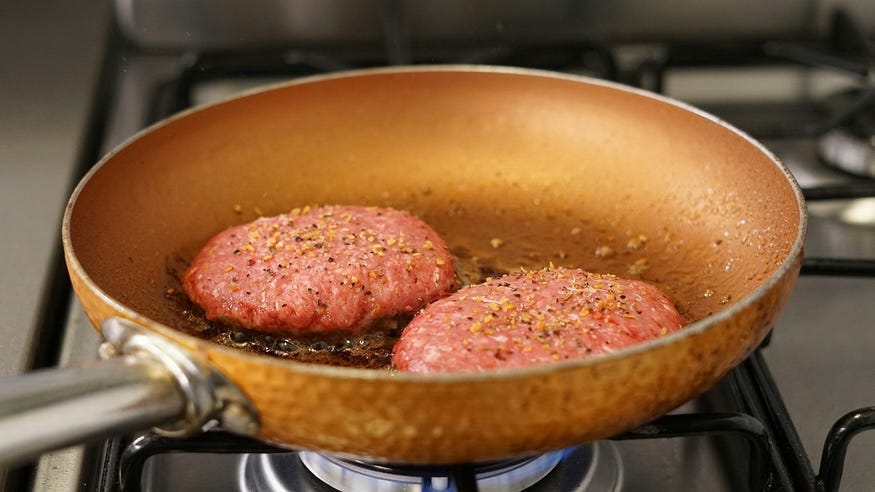
It’s August 2013. In a London studio, a chef is frying a burger in front of a live television audience. This burger cost $250,000 and bankrolled by Google co-founder Sergey Brin, and had never been anywhere near a farm. The verdict? Reportedly lacking in juiciness, but ‘definitely meat’.
This debut highlighted something beyond the science it took to grow the first cultured meat burger; it showcased the politics of its potential future. Over a decade after the first lab-grown burger, the cultured meat industry has grown to over 140 companies around the world, and is backed by over $3.4 billion in investments.
By combining research and knowledge in stem cell biology, tissue engineering, cell cultivation, and fermentation, the question arises about when we will start see engineered burgers on our own plates. However, before we replace the farm with the bioreactor, there are important questions to address regarding momentum and social consensus of this tech.
Read on Medium:
For Medium members: Who Gets to Feed the Future: The Hidden Politics of Cultured Meat | by Allegra Cuomo | InnoEthics: A Philosophy Student’s guide to Ethics of AI
For non-Medium members: https://medium.com/a-philosophy-students-guide-to-ethics-of-ai/who-gets-to-feed-the-future-the-hidden-politics-of-cultured-meat-549aad98c730?sk=ad11cd78a93287643c89f79b38e68801

You’re probably aware of the ‘Internet of Things’ — the various systems and objects within our physical lives that are equipped with sensors and software, allowing them to be interconnected and exchange data via a network, all happening with minimum human intervention. These things can range from phones, appliances, smart watches, thermostats, lighting systems, security cameras, vehicles, and more.
These systems have become commonplace within people’s lives. Now, here is the next step of this highly technologically interconnected reality: collaborative sensing.
This emergent phenomenon, often paired with its practical and technological manifestation known as Collaborative Sensing Networks, describes when the sensing capabilities of a group dramatically surpass the individual capacities of its members.
Read on Medium:
For Medium members: Collaborative Sensing Networks: What is the trade-off of frictionless living? | by Allegra Cuomo | InnoEthics: A Philosophy Student’s guide to Ethics of AI
For non-Medium members: https://medium.com/a-philosophy-students-guide-to-ethics-of-ai/collaborative-sensing-networks-what-is-the-trade-off-of-frictionless-living-5934517aebe3?sk=57839b5d8e35c828ae175e4d25f226d9